
Why Don't Car Manufacturers Fully Tune Their Engines?

Most drivers, when it comes to choosing a car, are attracted to models that have a high horsepower output, assuming this will lead to better performance. However, many of these same drivers might be surprised to learn that manufacturers don't always fully tune their cars for maximum horsepower and other performance capabilities.
The reason why is two-fold. The first is that car manufacturers do tune their vehicles for performance, just not exclusively for maximum horsepower. This is because car manufacturers want their vehicles to remain fuel efficient, reliable, and emissions-compliant in addition to being powerful. So, manufacturers opt to employ tuning settings that allow for better overall drivability without completely sacrificing horsepower.
The second reason is that for manufacturers to pursue maximum horsepower, a large number of modifications would be needed to the engine's software and hardware. These modifications, although leading to a faster car, could come with a slew of complications in terms of reliability and stability of the car's components. As a result, to make sure the vehicle remains in tip-top shape after leaving the dealership, car manufacturers generally go with a conservative tuning route instead.
There's also another caveat with performance tuning to consider. In a lot of countries, cars with significant modifications to their engine could be illegal and might require certifications that vary from place to place. So, to comply with certain government regulations and emission control laws, some car makers will limit their vehicles to only as much tuning as is necessary to remain legal.
The bottom line is, if you want to max out your vehicle’s performance, then it is best to leave it to a certified specialist like us, or to the vehicle's aftermarket tuning partner, who know how to optimize a car without damaging its internal components. On the other hand, if you're just looking for a slightly beefier vehicle to meet your driving needs, then factory settings are usually good enough.
EXPLORE POPULAR ARTICLES
-
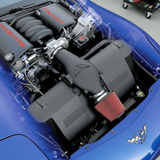
Uncorking the LS1: The Essential Air Intake Upgrade for Your 1997-2000 C5 Corvette
Nov 25th 2025The C5 Chevrolet Corvette, produced from 1997 to 2004, marked a significant leap forward for the ico
-

2011–2018 Dodge Challenger 6.4L
Oct 8th 2025Unleashing the Beast: The History of the 2011–2018 Dodge Challenger 6.4L and How Air Intake Upgrades
-

Unlocking Performance: Air Intakes and Stage 1 Performance Chips for Chevy Camaro
Oct 22nd 2024The Chevy Camaro is a legendary muscle car known for its aggressive styling and powerful engines. Ho